
Generative AI Service System
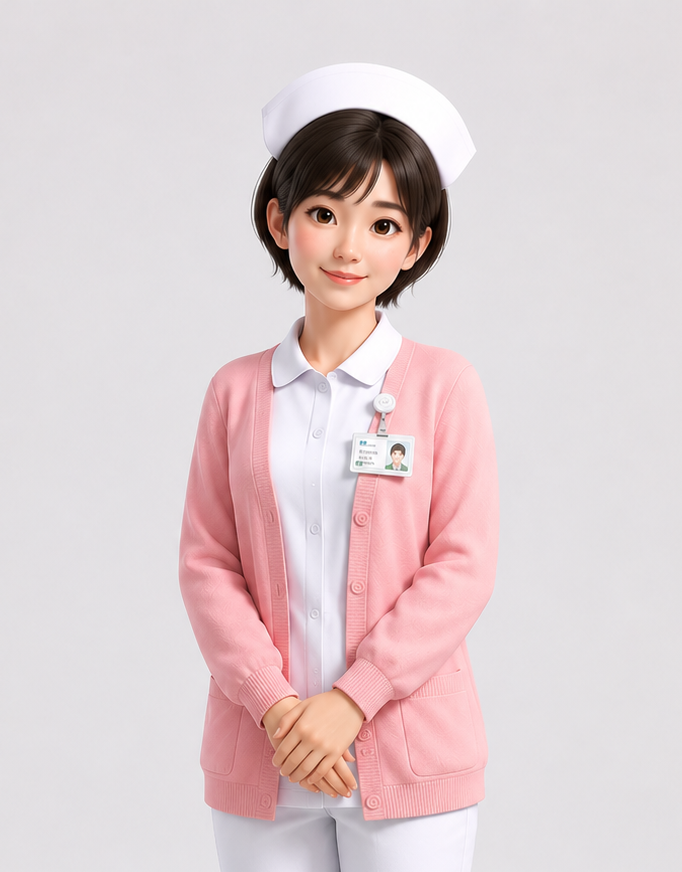
Generative AI Virtual Human Services
- Controlled, Hallucination-Resistant Interactions
Controlled AI responses help reduce incorrect information and the associated risk of losing user trust.
- Comprehensive Healthcare Integration
Integrates AI customer service, patient education, registration, health checkups, and other healthcare services into a unified solution.
- AI + MR/XR Integration
Combines 3D models, virtual characters, and spatial computing to create immersive experiences.
- Enterprise-Grade Security Architecture
Integrates Azure OpenAI with zero-trust authentication, with safeguards designed to prevent data leakage and the use of customer data for model training.
- Rapid Deployment
Through the EAAP platform, organizations can create AI agents without requiring extensive hardware infrastructure.
Product Introduction
AI-KM: The Foundation for a Wide Range of AI Services
Like the human brain, AI applications rely on a central knowledge base as their foundation.
AI-KM serves as the central intelligence platform for smart healthcare services. Built around three core technologies—a voice module, Logical Derivation Program Architecture (LDPAE), and AI Avatar command modules—it supports applications including AI customer service, patient education, registration, health checkups, and psychological assessments. AI-KM can also integrate with AI-MR/XR systems to create interactive healthcare environments that bridge physical and virtual experiences.
Unlike conventional generative AI systems, which may produce inaccurate or fabricated information, AcuSense uses controlled, script-based interactions and predefined emotional responses to make AI responses more predictable and reliable, supporting the principle that responsible AI should be controllable.
Understanding Your Needs, Building Smarter Healthcare Services
As a Microsoft technology partner, we develop AI service solutions and MR systems, with extensive experience in AI interaction, AI-AIoT, AI-KM, AI customer service, AR/VR/MR smart glasses, and system integration.
When healthcare institutions adopt generative AI, challenges such as hallucinations, copyright ownership, and cybersecurity can become major barriers to implementation. Without effective control over the accuracy and scope of AI responses, these issues may lead to complaints, legal risks, and loss of trust.
Our AI Agent system enables healthcare institutions to integrate customer service, patient education, registration, health checkups, and other services through a unified AI platform. Controlled responses, dedicated FAQ databases, and retrieval-augmented generation (RAG) help significantly reduce the risk of hallucinations and improve the reliability of AI-assisted healthcare services.
AI and MR technologies can also support medical education, preoperative simulation, interactive patient education, and clinical training. We provide end-to-end implementation services, from needs assessment and system planning to model development and staff training, helping clients create interactive physical and virtual environments tailored to real-world healthcare needs.
Frequently Asked Questions
- Which industries can use this system?
The system is designed for healthcare institutions, long-term care facilities, and related care environments. Applications include AI-assisted registration, customer service, patient education, health checkups, and MR-based medical education, with solutions customizable to specific needs.
- Can the AI hallucinate or provide incorrect answers?
The system uses controlled and restricted-response mechanisms designed to minimize AI hallucinations and incorrect responses, supported by dedicated FAQs and databases tailored to individual healthcare institutions.
- Will company data be leaked or used to train other models?
The system adopts the enterprise-grade Azure OpenAI architecture, supports dedicated P2P enterprise connections, private cloud environments, and VNet security mechanisms. It also complies with international standards such as HIPAA, GDPR, and SOC2. User interactions with GPT models are not used to train the underlying models or shared with other organizations.